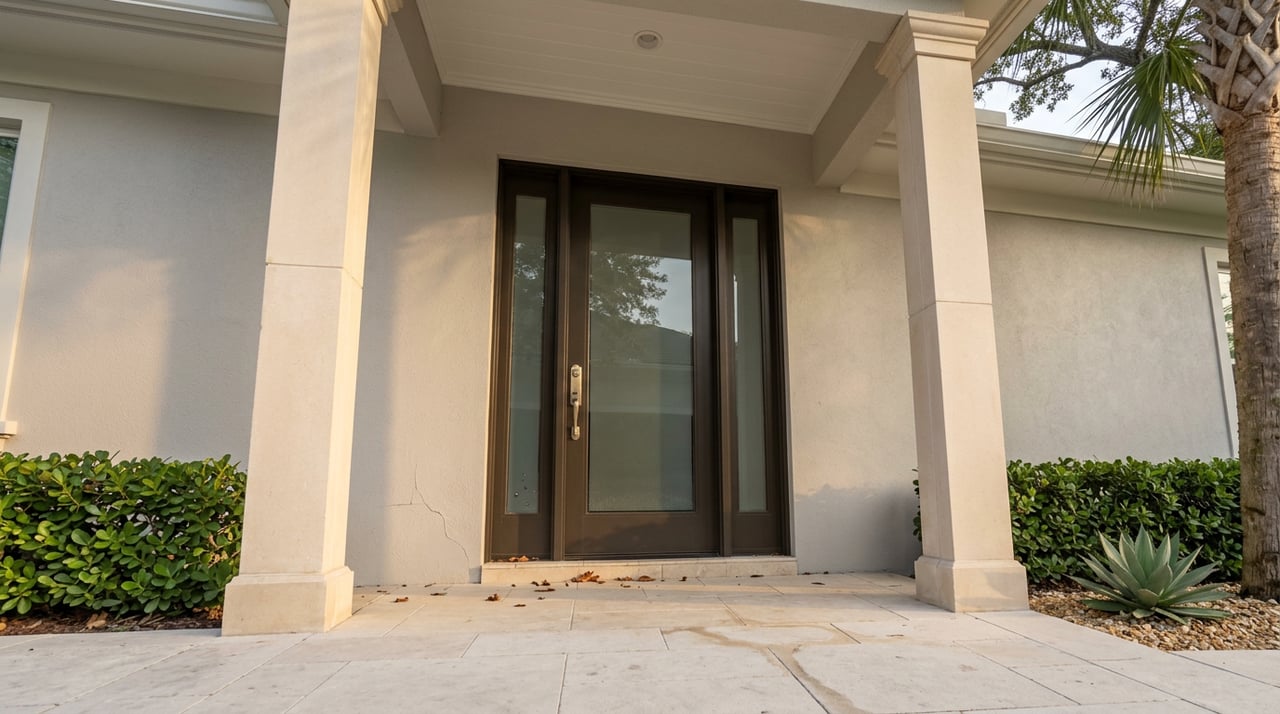
Most buyers touring Clearwater Beach assume the water is the whole deal. Buy something close enough to the Gulf, list it on a platform, collect nightly bookings. Then they get their offer accepted, open the condo declaration during due diligence, and find out the building sits in a residential zoning district where the City of Clearwater simply does not allow stays shorter than 31 days. No amount of Gulf frontage changes that. The zoning line, not the tide line, is what decides whether a purchase can ever function as a nightly rental, and in 2026 that line is doing more to shape prices on the island than any renovation or amenity package.
What the ordinance actually says
Clearwater's municipal code sets a 31-day minimum stay across most residential zoning districts on the beach. Transient lodging under that threshold is confined to Tourist District and Commercial Tourist overlay zones. That framework sits inside the city's Beach by Design Special Area Plan, which governs land use, density, and character along the beach corridor and effectively concentrates legal short-term rental activity into a narrow band of designated commercial lodging parcels.
For most of the residentially zoned island, a property owner can advertise a monthly rental. They cannot advertise a weekly one, and they cannot advertise a nightly one, regardless of what the building looks like from the water.
There are three ways around that wall, and only three:
| Category | Minimum stay allowed | What a buyer needs to verify |
|---|---|---|
| Standard residential zoning | 31 days | Confirm zoning district before assuming any rental flexibility |
| Tourist District / Commercial Tourist overlay | Daily or weekly, per city registration | Confirm the parcel's overlay designation with the city, not the listing description |
| Condo-hotel or legacy grandfathered property | Daily, weekly, or nightly | Get grandfather status in writing from the city; some single-family and duplex parcels on north Clearwater Beach retained transient rights predating the ordinance |
A condo-hotel unit is structurally exempt from the standard prohibition on kitchens in transient accommodations, provided the building itself meets the city's construction and use criteria for that classification. A legacy property is different. It is a single-family home or duplex, most concentrated on north Clearwater Beach, that received transient rental permission before the ordinance tightened and kept that right through subsequent ownership changes as long as the rental use has stayed continuous. Both categories are narrow. Neither is something an MLS remark can substitute for. The only reliable confirmation is a grandfather letter or zoning verification from the city's Development and Neighborhood Services department, obtained before the buyer removes their inspection contingency.
Why this line is already priced into the market
Here's where the ordinance stops being a compliance footnote and starts explaining the numbers a buyer sees on a portal.
As of August 2026, the list-price median for single-family houses on Clearwater Beach reached roughly $1,861,500, up from about $1,525,000 in August 2025, a jump of more than 20 percent in a single year. Condo list prices moved far less over the same window, from around $675,000 to about $700,000, closer to 4 percent. Meanwhile median sale price per square foot for the island fell over the trailing three months ending June 2026, even as headline list prices climbed, a divergence that only makes sense once you separate the two product types.
Single-family buyers on Clearwater Beach are mostly not chasing rental income. Whether their street sits in a residential zone or a Tourist District overlay barely changes their decision, because they intend to live there or use it as a seasonal residence with monthly-length stays, both of which the 31-day rule already permits. That segment has kept bidding, and the price growth shows it.
Condos are a different story. They make up the largest share of Clearwater Beach transaction volume, and a meaningful portion of that buyer pool has historically shopped with rental income in mind. Once a serious buyer discovers, mid-transaction, that their specific building sits in a residential zone rather than a Tourist District or condo-hotel classification, the unit's appeal for nightly income disappears and the deal either stalls, gets renegotiated, or the listing keeps sitting. That is consistent with what the days-on-market data shows: average time on market for the island stretched to roughly 120 days in August 2026, compared to about 72 days a year earlier, and some measures put the average time to go under contract well beyond that. Active inventory has grown sharply over the same period. None of that reads like a market where demand vanished. It reads like a market where a specific class of buyer, the income-motivated condo shopper, is taking longer to act because the zoning math doesn't work the way they assumed when they started looking.
The paperwork that actually protects a rental play
If income potential is part of the plan, the zoning district is the first thing to confirm, not the last. A few pieces of due diligence matter more here than almost anywhere else on the Gulf Coast:
- Pull the property's zoning classification directly from the city rather than relying on how the listing describes the location. "Beachfront" and "Tourist District" are not the same claim.
- If the seller or listing agent asserts grandfathered status, ask for the documentation. A verbal history of past rentals is not the same as a letter from the city confirming continuous, permitted transient use.
- Confirm the building's classification as a condo-hotel if that's the basis for rental flexibility, since that designation carries its own construction and use criteria that not every "resort-style" building actually meets.
- Register with the Florida Department of Business and Professional Regulation for a vacation rental license wherever short-term use is legally possible, and register separately with Pinellas County for the tourist development tax if stays will run under six months.
- Check the condo or HOA declaration on top of the city's zoning rules. An association can prohibit or cap short-term rentals even inside a Tourist District parcel where the city itself would allow them.
Skipping any one of these steps is how a buyer ends up owning a property that looks like it should generate nightly income and legally cannot.
What this means if rental income isn't the point
Not every Clearwater Beach buyer is chasing an income property, and the same zoning wall that frustrates investor buyers works in the opposite direction for owner-occupants. A residential-zoned street where nightly turnover isn't legally possible tends to mean fewer weekly guest turnovers, fewer parking conflicts tied to short-stay visitors, and a more stable set of neighbors who are either full-time residents or 31-day-plus seasonal tenants. If the appeal of Clearwater Beach is the lifestyle rather than the yield, that same ordinance that's cooling condo demand elsewhere on the island is quietly protecting the quality of life on the blocks it applies to.
Knowing which side of that line a specific address sits on before making an offer is the difference between a purchase that does what you expect and one that requires a second plan.
A few questions worth settling before you write an offer
Does the 31-day rule apply to all of Clearwater, or just Clearwater Beach? The ordinance is citywide, but its practical effect concentrates on the beach because that's where most of the transient lodging demand and Tourist District overlay parcels exist.
Can a condo association allow nightly rentals even if the city zoning permits it? Yes, and often does the opposite. Association declarations can be more restrictive than the underlying city zoning, so both layers need to be checked independently.
Is a grandfathered legacy property a safe long-term bet for rental income? It depends on maintaining continuous operation. These rights are generally tied to the property and its documented use history, not to the ordinance itself, so a lapse in rental activity can put the grandfathered status at risk.
Clearwater Beach still offers plenty for buyers who want it, whether that's a quiet residential street, a Tourist District condo built for turnover, or a legacy home with rental rights already attached. The number that matters most before you write an offer isn't the list price. It's the zoning district.
If you're comparing addresses on Clearwater Beach and want a read on which zoning tier a specific property actually sits in before you go under contract, Home Selling Group of Florida can walk through it with you. Request a Free Home Valuation and let's talk through what your target address can and cannot legally do.